
Case study · California · Summer 2026
Giving California entertainment workers a voice in one of Hollywood's biggest public policy fights
The moment
One of the largest media transactions in American history became a public fight.
California Attorney General Rob Bonta was leading a 12-state antitrust lawsuit seeking to block Paramount Skydance's acquisition of Warner Bros. Discovery.
What we were up against
- Full-time advocacy organizations with years of relationships in place
- Celebrity advocates with instant access to microphones
- A news environment already running their framing
- Budgets and staff that ordinary workers simply do not have
Much harder to hear
The ordinary people whose livelihoods depended on California entertainment production.
Most did not have lobbyists.
Most did not lead advocacy organizations.
Many had never contacted an attorney general before.
Neighbors was built for exactly that problem.
Our role
Better decisions happen when the people closest to a challenge help shape the solution.
We made participation practical, helped people tell their own stories in their own names and built the channels that carried those voices straight to decision-makers.
Every way people spoke
- Personalized letters drafted from each person's own answers
- Live phone connections into state offices
- Media interviews with local and trade press
- Public events, social posts and video testimonials
Finding the people behind the statistics
Within weeks, Californians shared stories that rarely appear in economic reports.
Workers described months without steady work.
Families talked about exhausting savings and struggling with mortgages, groceries and health insurance.
Small-business owners described customers disappearing as production slowed.
Some workers said they were considering leaving California entirely.
By the end of the campaign
From individual stories to a public voice.
Thousands of Californians, in their own words, on the record.
The people became the story
Online participants became real-world public messengers, speaking about their own lives.
Actors stood beside hair and makeup professionals. Production workers stood beside small-business owners.
What that looked like
- More than a dozen workers and small-business owners at the campaign's first major Los Angeles public event
- Coverage across local television, radio, print and entertainment media
- Workers featured in professionally produced testimonials
- A visible network of Californians speaking for themselves
How real people were activated
Workers took the podium, and the press came to listen.
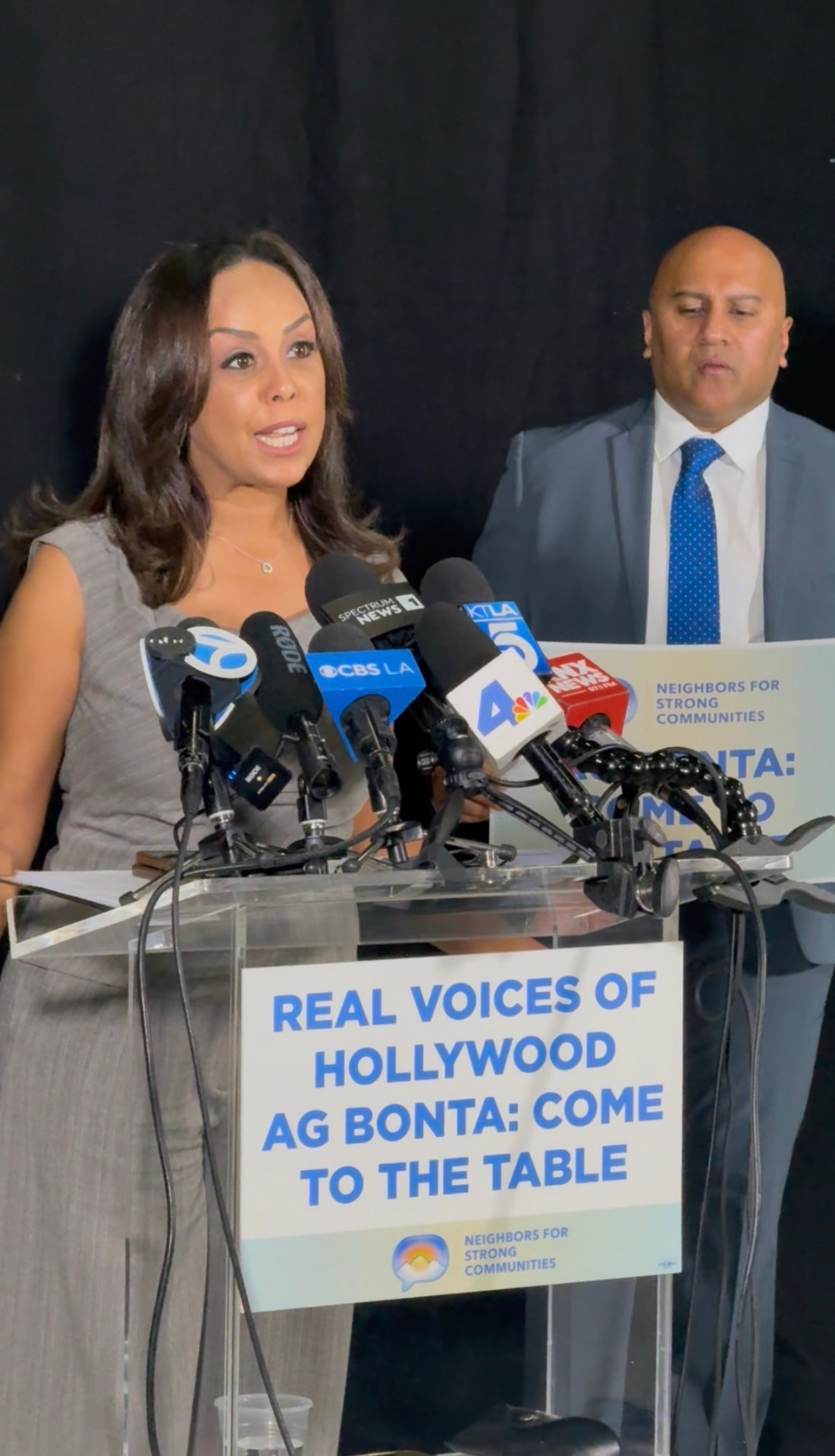
Los Angeles press conference
Neighbors for Strong Communities in front of CBS LA, KTLA, NBC4 and Spectrum News.
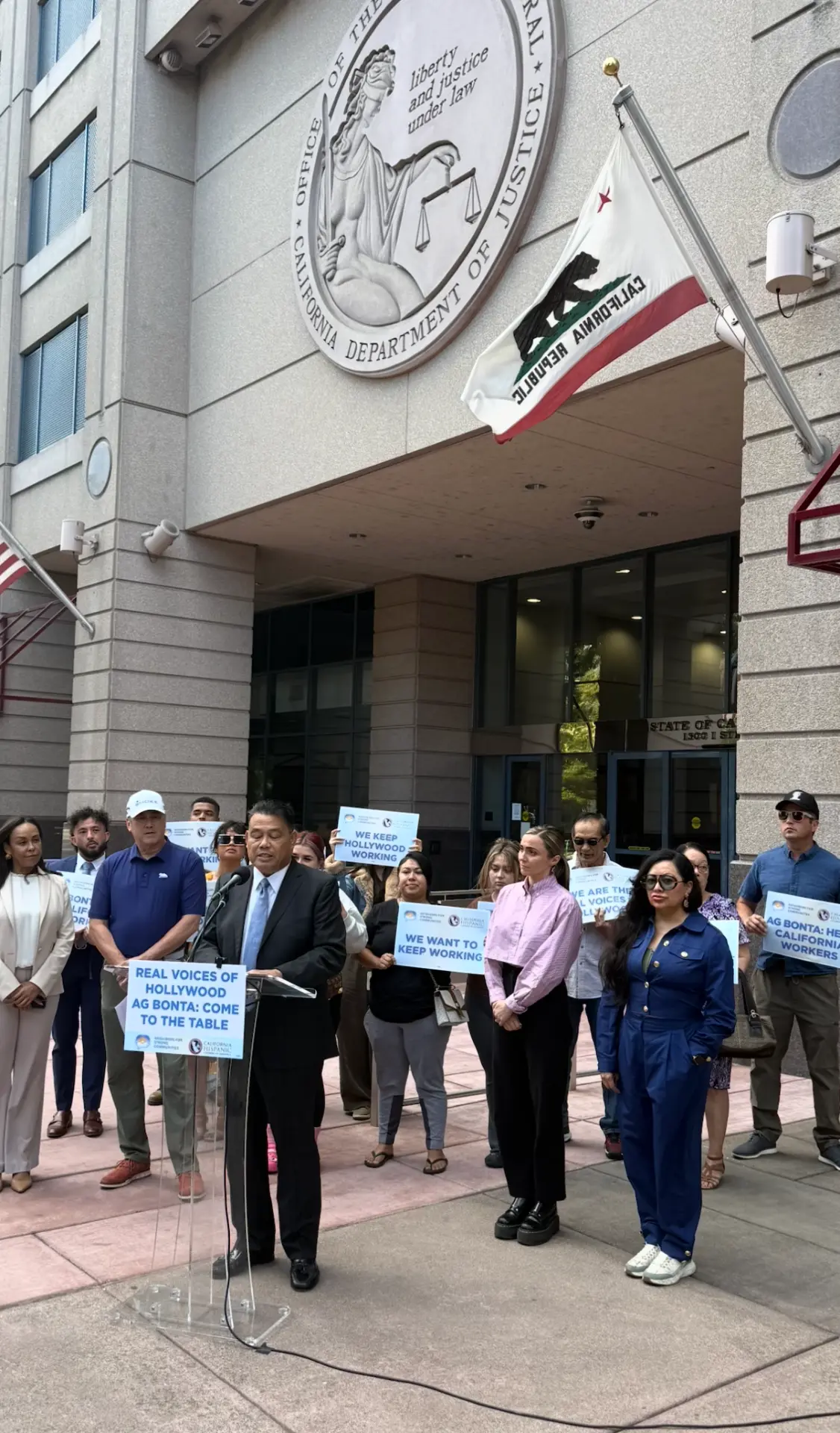
Sacramento press conference
Workers, the California Hispanic Chambers of Commerce and local leaders outside the Department of Justice.
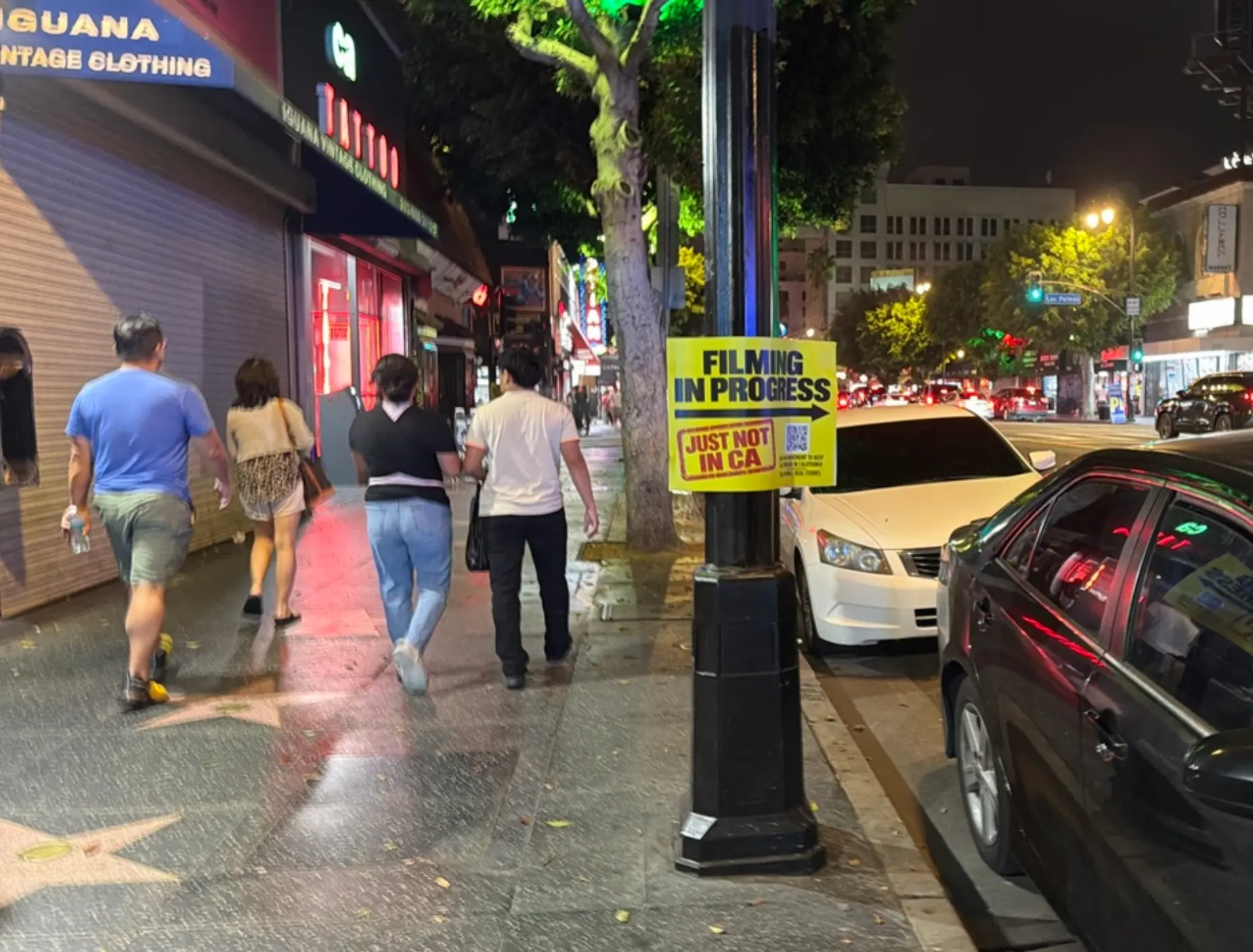
“Filming in Progress — Just Not in CA”
2,000 signs across Hollywood and Sacramento, each QR code opening a real worker's video testimonial.
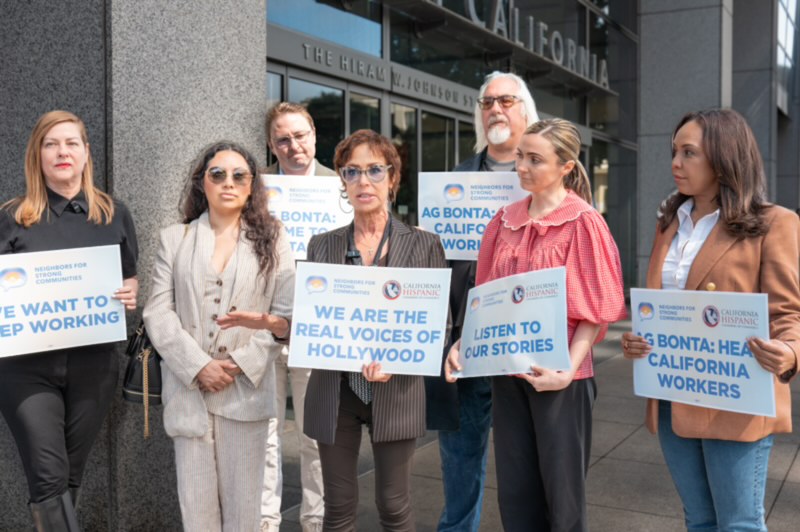
San Francisco press conference
Workers and Neighbors for Strong Communities outside the California Department of Justice in San Francisco.
Taking those voices to the Capitol
Entertainment workers went where they are rarely at the center of the conversation.
Sacramento
Workers stood outside the California Department of Justice with the California Hispanic Chambers of Commerce, local elected officials and community leaders.
San Francisco
The next day, worker and elected-official voices reached a Northern California television audience.
20 Democratic leaders
Elected officials, former officials and party leaders publicly supported a negotiated resolution.
2,000 signs
“Filming in Progress — Just Not in California” appeared across Downtown and Midtown Sacramento.
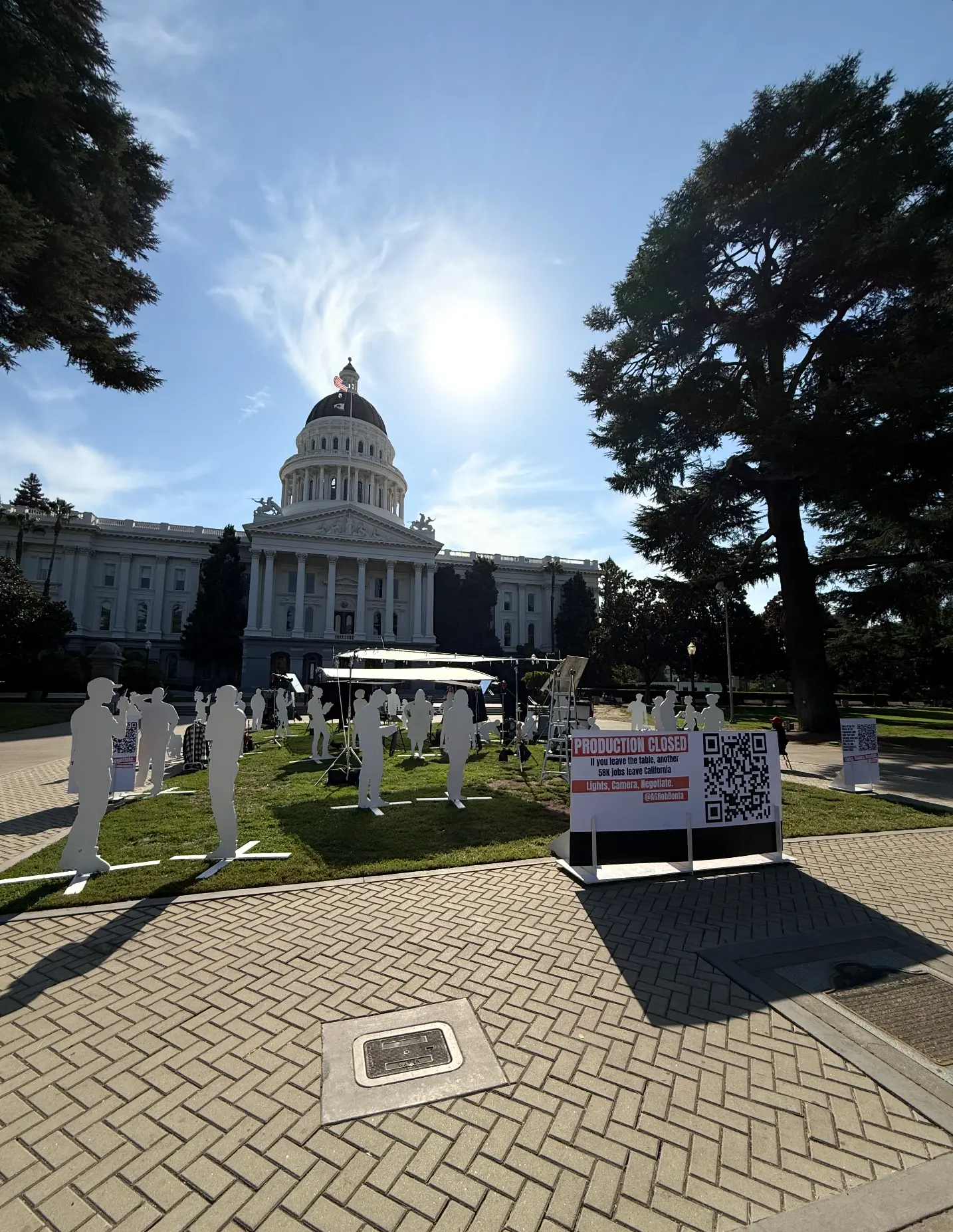
At the State Capitol
An installation that turned economic statistics into something physical.
Created with Sacramento artists to represent California's loss of entertainment jobs and production.
September 21, 2026
Attorney General Bonta announced a settlement built around film output, domestic production and the workers who depend on them.
The objective we set out to win — real commitments on production and real protection for workers — is exactly what the agreement delivered.
For weeks we elevated three concerns
- Film output
- Domestic production
- Protecting workers
Those were the voices our campaign put in front of his office every single day.
“What we heard over and over … is that what matters most is consistent film output, domestic production, and protecting the livelihoods of workers.”
We help communities speak for themselves.
In California, thousands of people did. And they became impossible to ignore.
Everyone deserves a voice that matters.